
Thomas Paine
Thomas Paine (January 29, 1737 — June 8, 1809)
American Founding Father, Revolutionary Thinker, Architect of American Independence
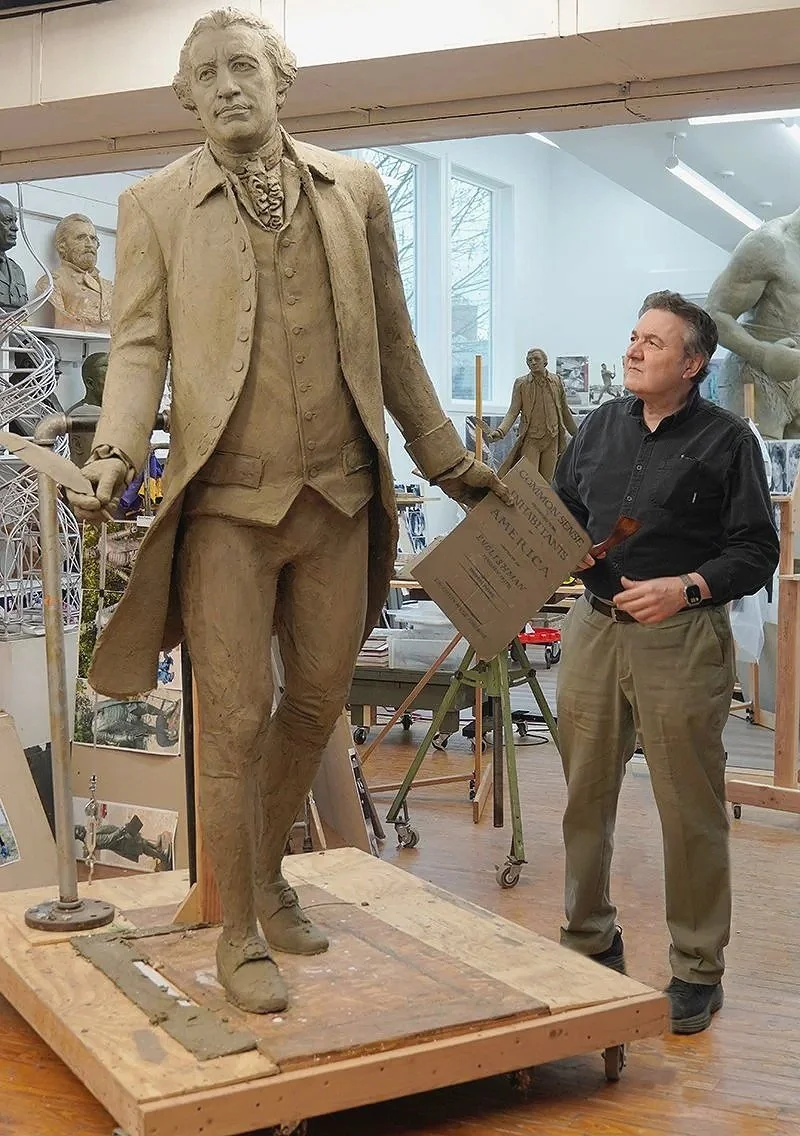
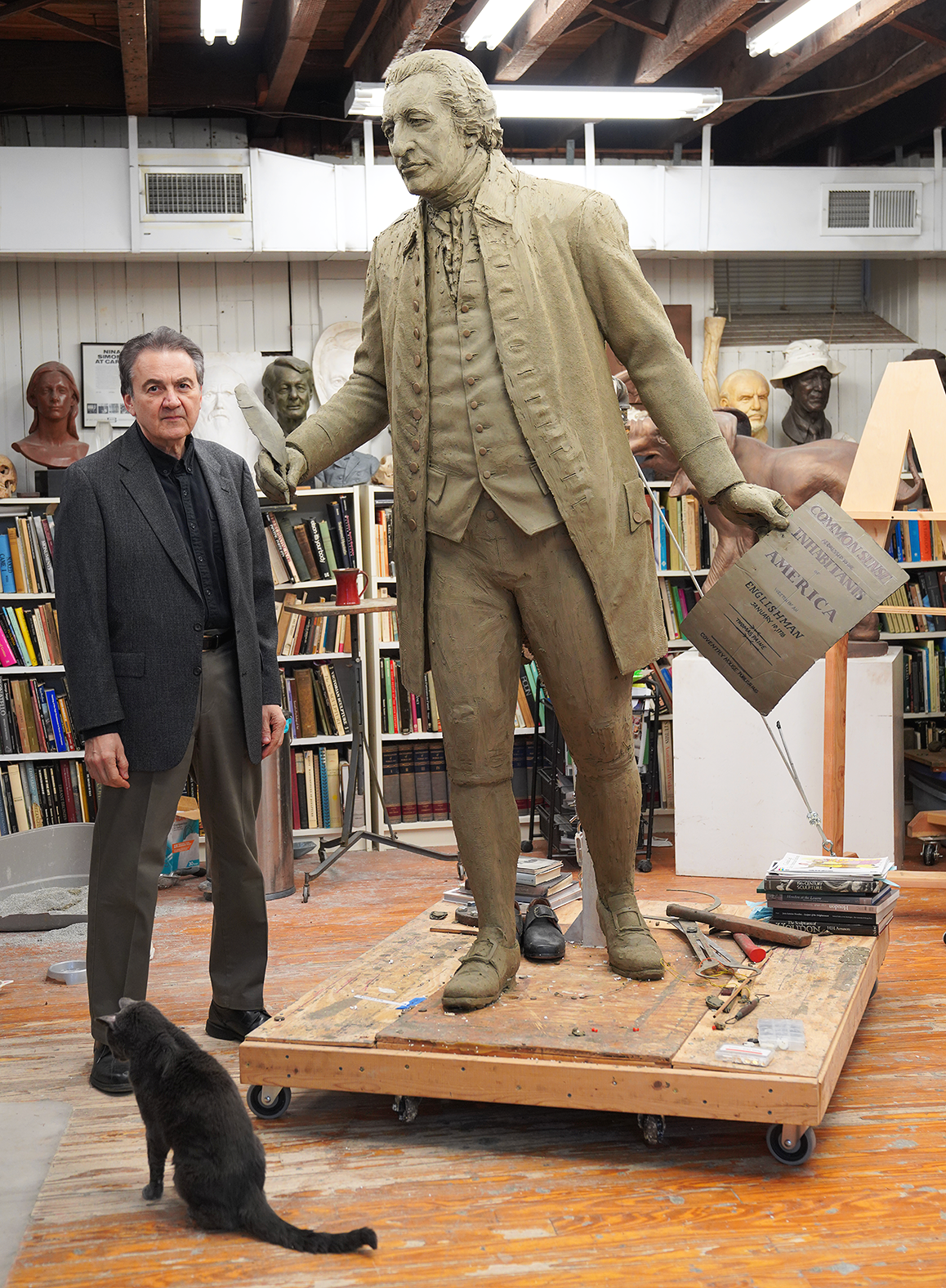
Monumental statue of Thomas Paine—American Founding Father and principal voice behind the call for independence—sculpted by Zenos Frudakis. Shown here in clay as a work in progress, the final sculpture will be cast in bronze. Paine, an English-born political philosopher and revolutionary writer, played a defining role in both the American and French Revolutions. His works Common Sense (1776) and The American Crisis (1776–1783) became foundational texts of the American Revolution, rallying colonists toward independence and sustaining morale in the darkest moments of the war.
Monument / Work in Progress
Size: 7-feet high
Media: Clay (to be cast in bronze)
Location: Frudakis Studio
⭐America 250—Thomas Paine and the Birth of American Identity
As the nation commemorates America 250, Thomas Paine stands out as one of the most influential voices shaping the principles on which the United States was founded. Paine was not simply a writer—he was a catalyst. Through bold, accessible, and uncompromising arguments for liberty, equality, and self-government, he transformed the mood of the colonies and helped define the very meaning of the American experiment.
A Revolutionary Force
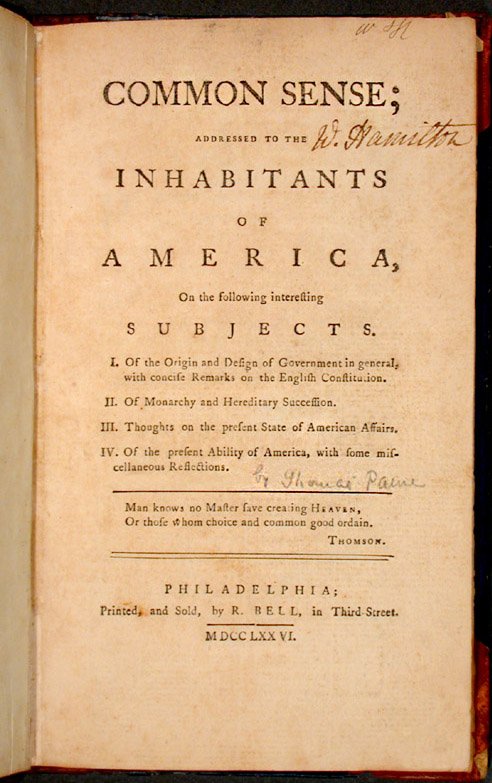
With the publication of Common Sense in January 1776, Paine reframed the debate: independence was not just desirable—it was necessary. Selling more than half a million copies, the pamphlet reached ordinary people, not just political elites, turning widespread frustration into a unified demand for freedom. He dismantled the logic of monarchy and hereditary rule using clear, direct language that empowered everyday colonists to see themselves as political actors.
His wartime essays in The American Crisis, beginning with the immortal line “These are the times that try men’s souls,” fortified both Washington’s troops and public resolve, carrying the revolutionary spirit through its most perilous moments.
Shaping the Nation’s Principles
Paine’s belief in government by consent, equality under the law, and the rights of the individual helped shape the ideological foundation of the new republic. Many of his ideas—representative democracy, the rejection of tyranny, and the moral responsibility of a nation to protect human rights—influenced the creation of the Constitution and later the Bill of Rights.
A Legacy That Extends Beyond 1776
Even after independence, Paine continued to push the boundaries of political thought.
In The Age of Reason, he defended freethought and challenged the influence of organized religion, sparking discussions that continue to inform America’s commitment to church–state separation.
In Agrarian Justice, he proposed early concepts of social welfare, including support for the poor and a form of basic income—ideas far ahead of their time, and precursors to modern social safety nets.
His belief in the power of ordinary people continues to inspire movements for democratic reform, civil rights, and civic engagement.
America 250 Reflection
For 250 years, Paine’s words have echoed through the nation’s most defining struggles—from abolition and suffrage to civil rights and contemporary debates about freedom and equality. His arguments for human rights, representative government, and the moral duty of a republic remain as urgent and relevant today as they were in 1776.
As America marks its semiquincentennial, Thomas Paine’s legacy challenges us once again: to question inherited assumptions, to defend liberty with courage, and to ensure that the promise of the American Revolution continues to expand for every generation.
Related Sculpture
Thomas Paine Relief Sculpture