
Justice Ruth Bader Ginsburg
Ruth Bader Ginsburg (March 15, 1933 - September 18, 2020)
Ruth Bader Ginsburg was born and raised in Brooklyn, New York. She earned her B.A. in Government at Cornell University, attended Harvard Law School, and received her LL.B. from Columbia Law School in 1954, graduating at the top of her class. She married Martin D. Ginsburg in 1954. From 1959 to 1961, she served as a law clerk to Judge Edmund L. Palmieri of the United States District Court for the Southern District of New York.
During the 1960s, Ginsburg was associate director of a Columbia Law School Project on International Procedure, where she studied the Swedish legal system and co-authored Civil Procedure in Sweden with Swedish jurist Anders Bruzelius. In 1963, she became a professor at Rutgers Law School and later taught Civil Procedure at Columbia Law School from 1972 to 1980. She also served as a fellow at the Center for Advanced Study in the Behavioral Sciences in Stanford, California.
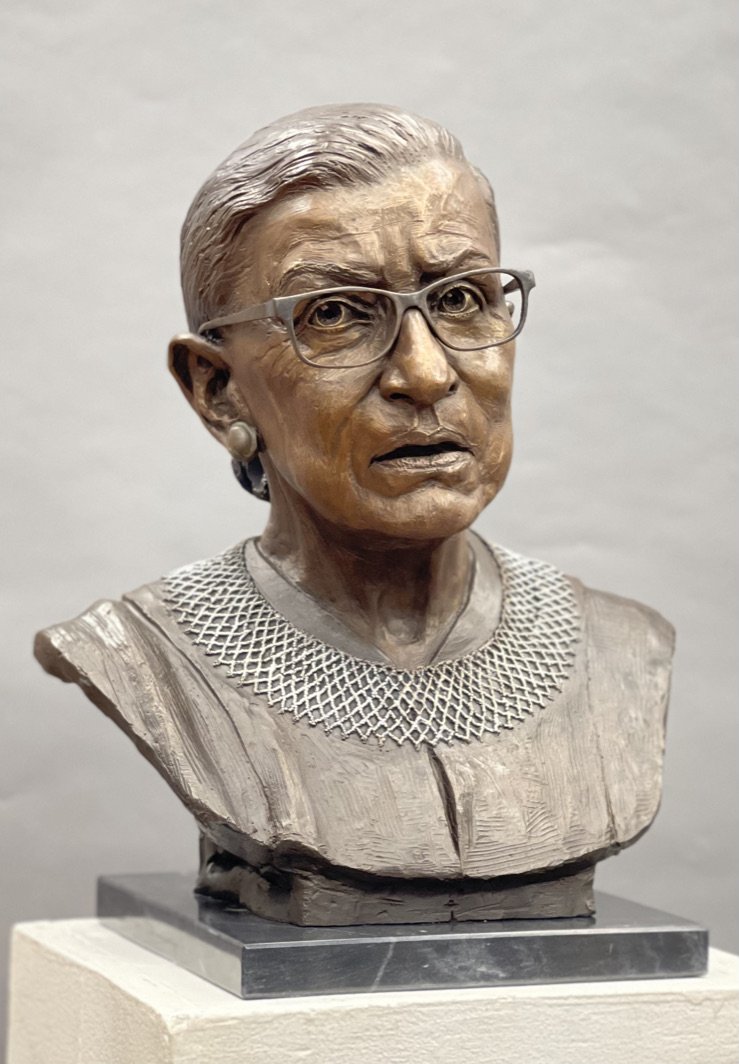
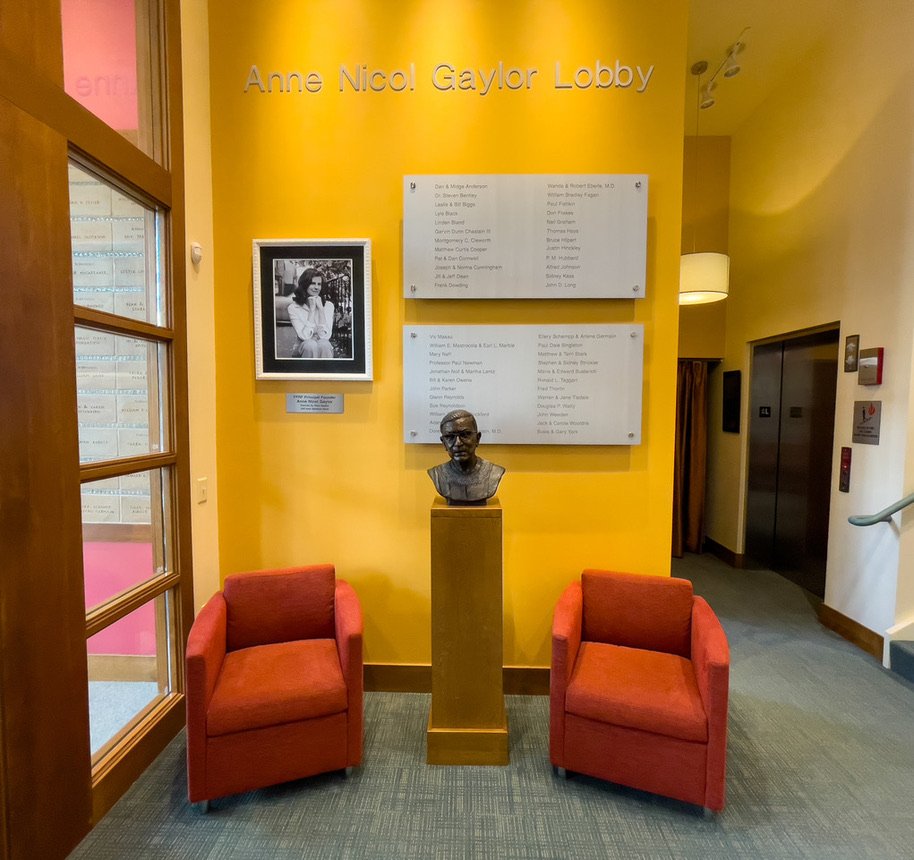
Portrait Sculpture
Size: Life size
Media: Bronze
Installed: July 2021
Collection: Freedom From Religion Foundation
Location: Freethought Hall, Freedom From Religion Foundation Offices, Madison, Wisconsin
As a practicing attorney, Ginsburg litigated sex discrimination cases for the American Civil Liberties Union (ACLU) and served as its general counsel (1973–1980) and on its National Board of Directors (1974–1980). In 1980, President Jimmy Carter appointed her to the U.S. Court of Appeals for the District of Columbia Circuit. In 1993, she was nominated by President Bill Clinton to serve on the Supreme Court, becoming the second woman and the first Jewish woman to serve on the Court. She held this position for 27 years.
During her tenure, Ginsburg authored influential majority opinions, including United States v. Virginia (1996), which declared that qualified women could not be denied admission to the Virginia Military Institute. Other notable opinions include Olmstead v. L.C. (1999), Friends of the Earth, Inc. v. Laidlaw Environmental Services (TOC), Inc. (2000), and Ledbetter v. Goodyear Tire & Rubber Co. (2007). Her dissent in the Ledbetter case inspired the Lilly Ledbetter Fair Pay Act, signed into law by President Barack Obama in 2009, making it easier for employees to pursue pay-discrimination claims.
⭐America 250 — Ginsburg’s Enduring Legacy in Civil Rights and Justice
Justice Ruth Bader Ginsburg was an American jurist who served as an Associate Justice of the Supreme Court of the United States for 27 years, beginning in 1993. She was the second woman and the first Jewish woman to serve on the Supreme Court. Ginsburg dedicated her legal career to advancing gender equality and women’s rights.
Before her judicial appointment, she practiced law as an attorney, litigating sex discrimination cases for the American Civil Liberties Union, where she also served as general counsel and on its National Board of Directors. During her tenure on the Supreme Court, Ginsburg authored influential majority opinions, including United States v. Virginia, which declared that qualified women could not be denied admission to the Virginia Military Institute. Other notable opinions inspired the Lilly Ledbetter Fair Pay Act, signed into law by President Barack Obama, making it easier for employees to pursue pay-discrimination claims.
In recognition of her lifelong efforts to advance liberty and equality, she was awarded the Liberty Medal by the National Constitution Center. Her numerous awards recognize her lifelong advocacy for gender equality and her significant contributions to law, human rights, and jurisprudence.
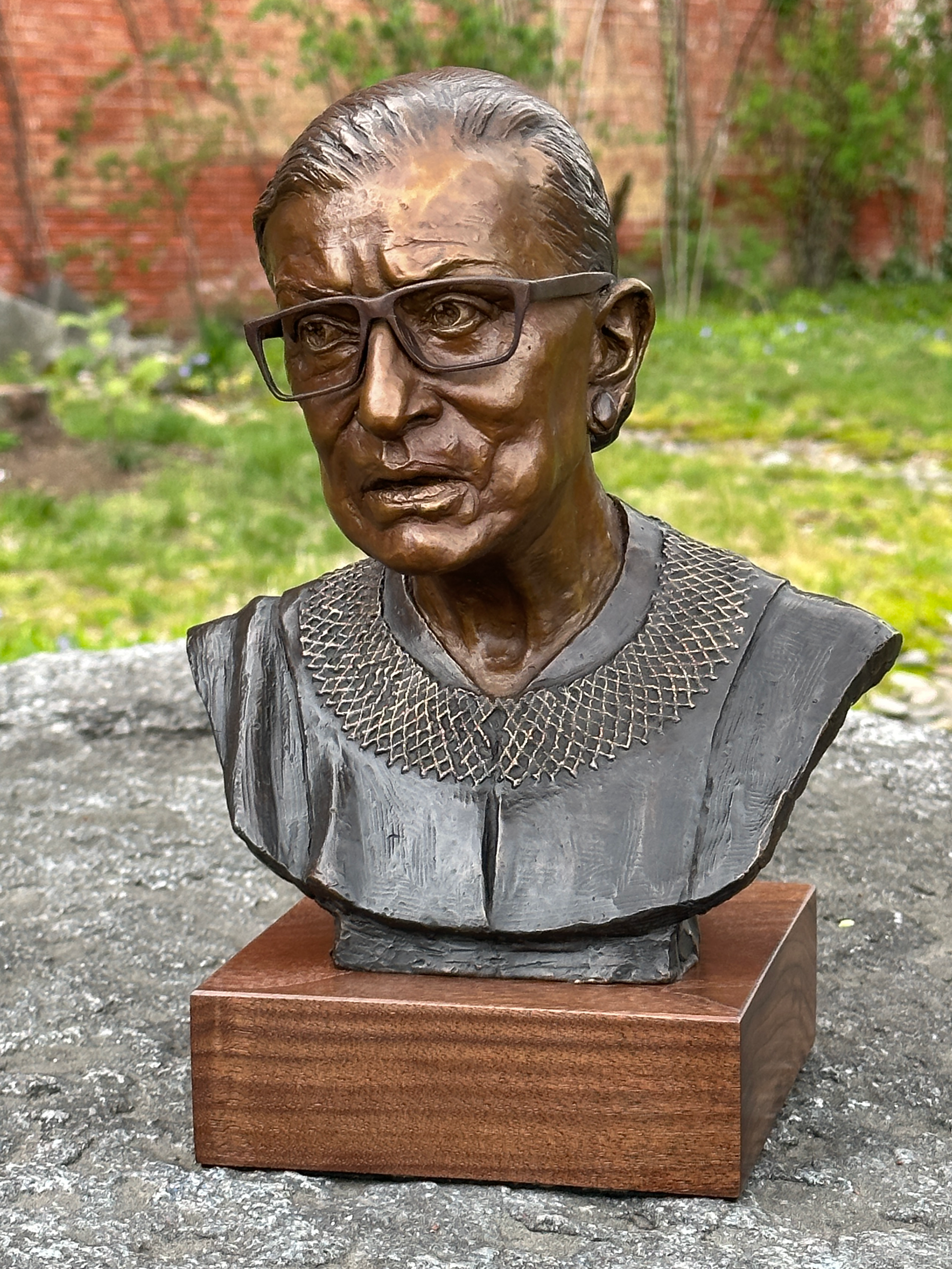
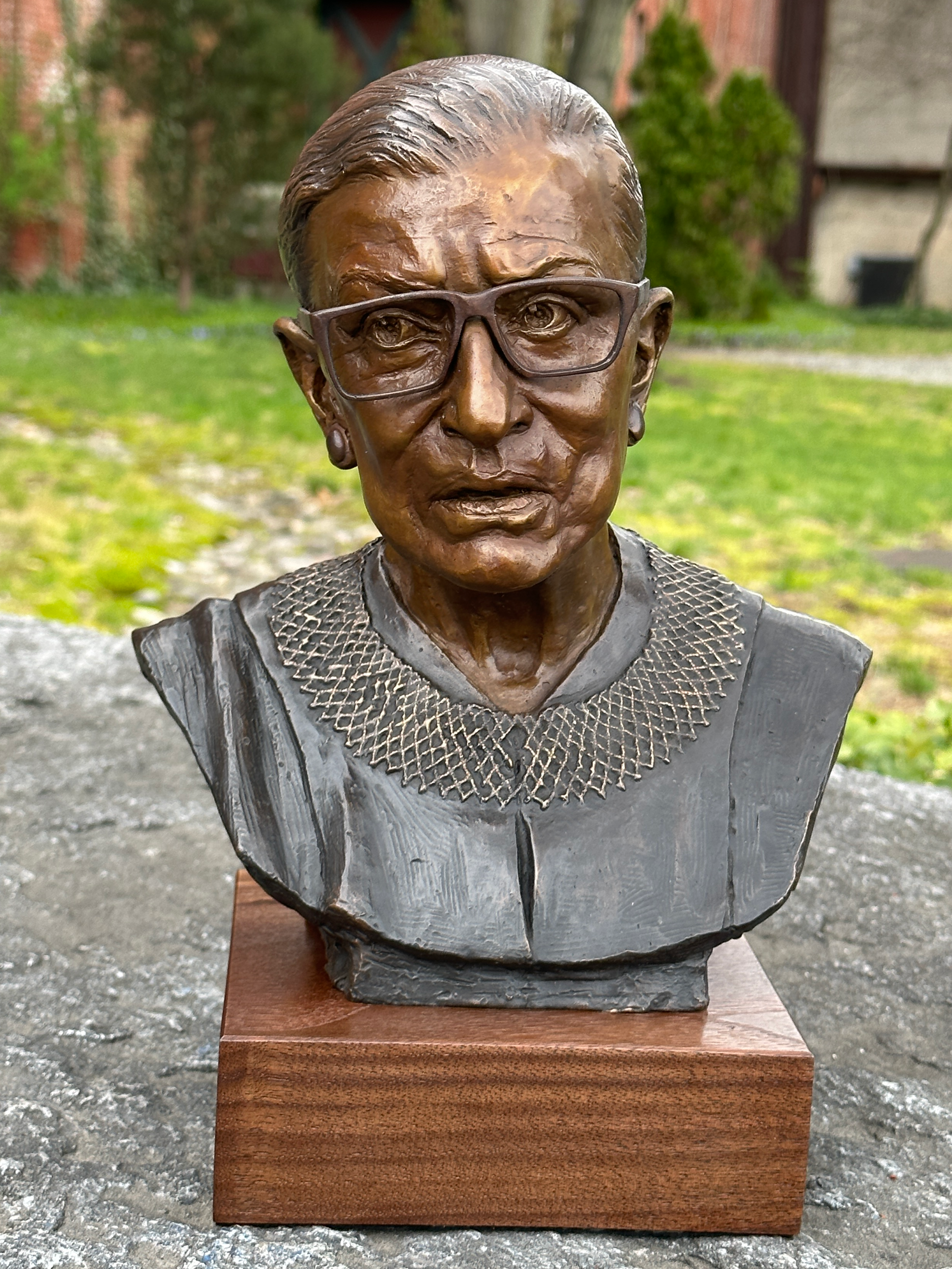
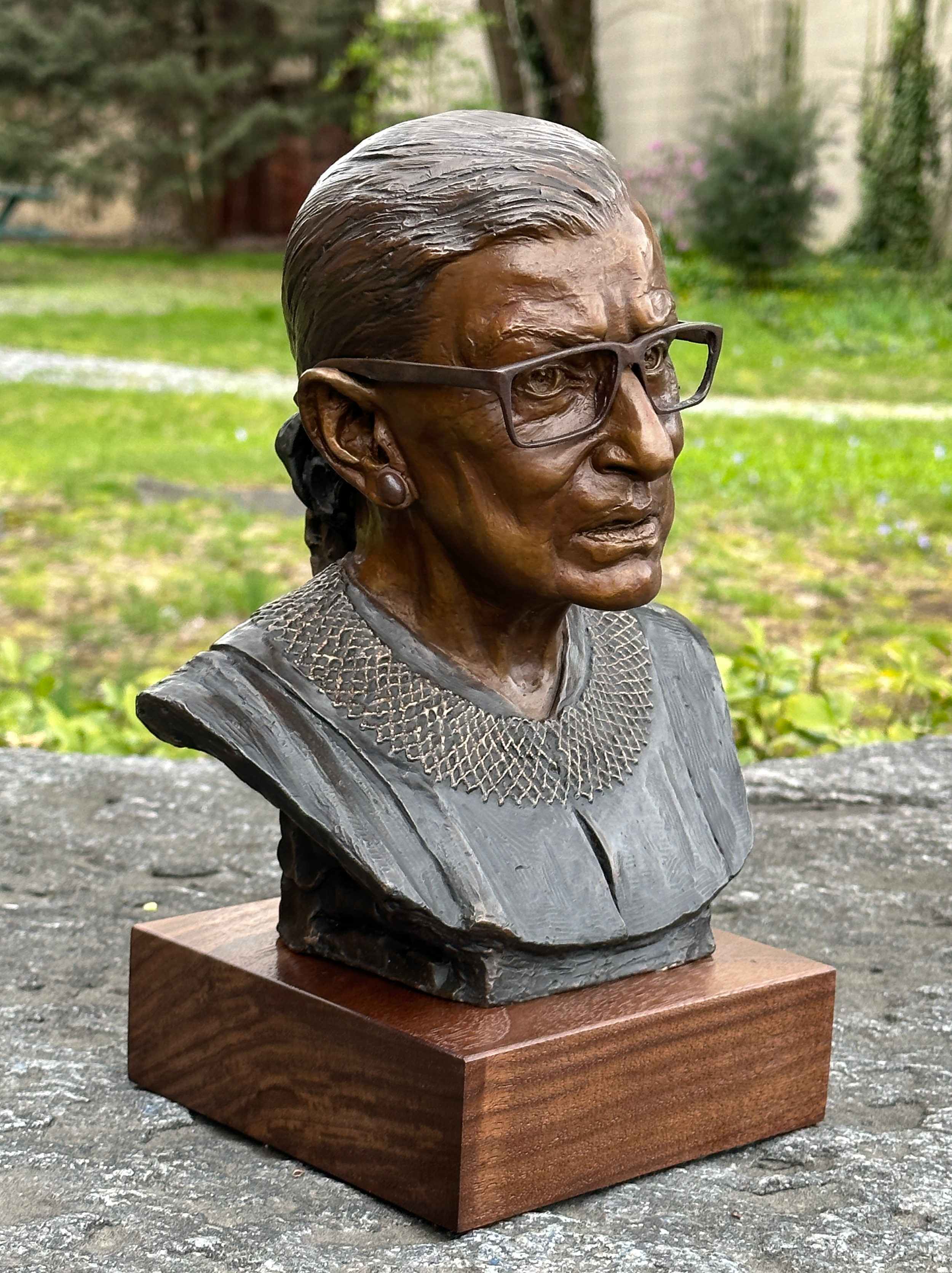
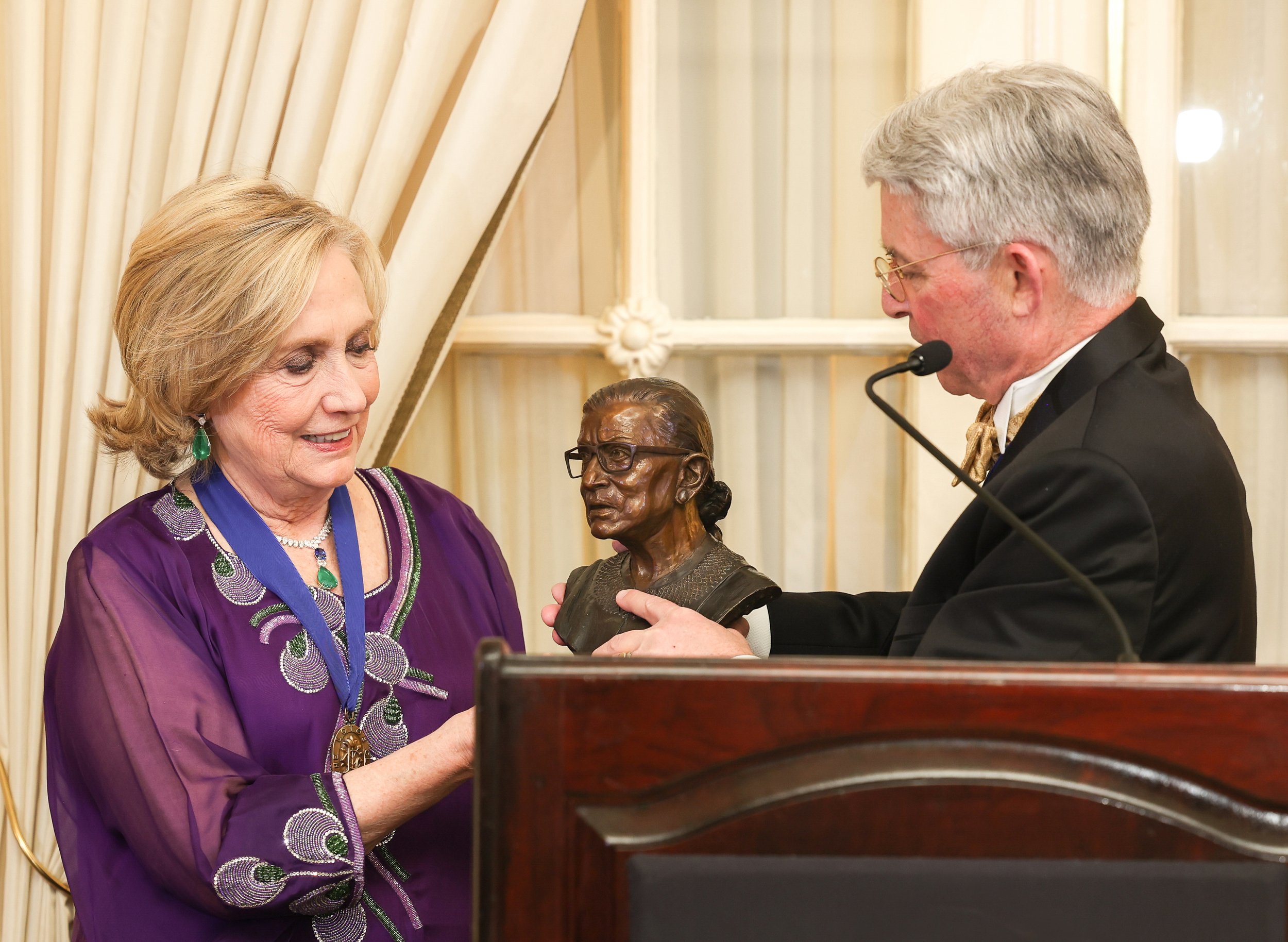
Award Sculpture
Subject: Justice Ruth Bader Ginsburg
Size: 10-inches high with a 2-inch wooden base
Media: Bronze
Created: 2023
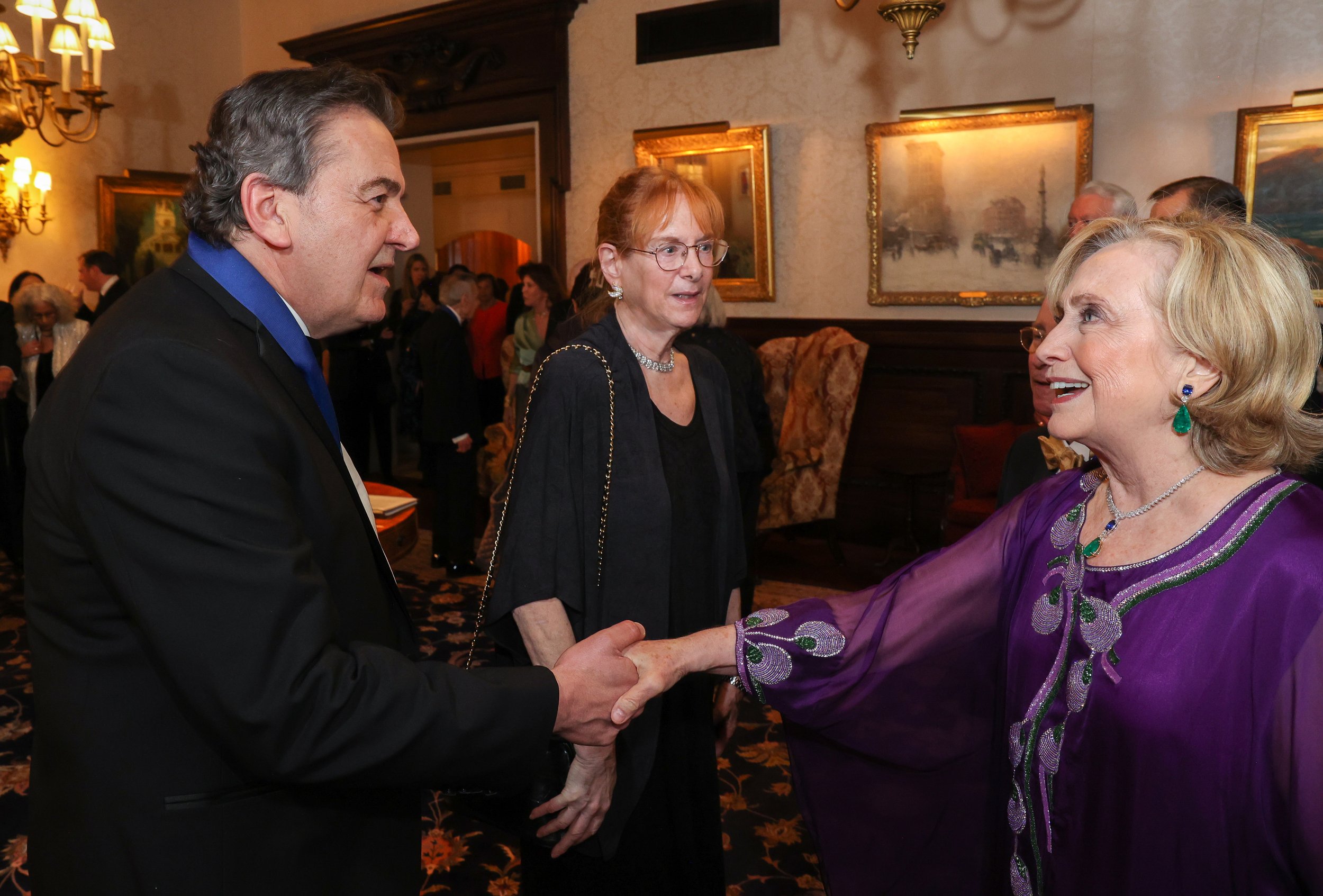
Award: Presented to Hillary Clinton on April 5, 2023 when honored for lifetime achievements
Location: LOTOS Club, New York, New York