
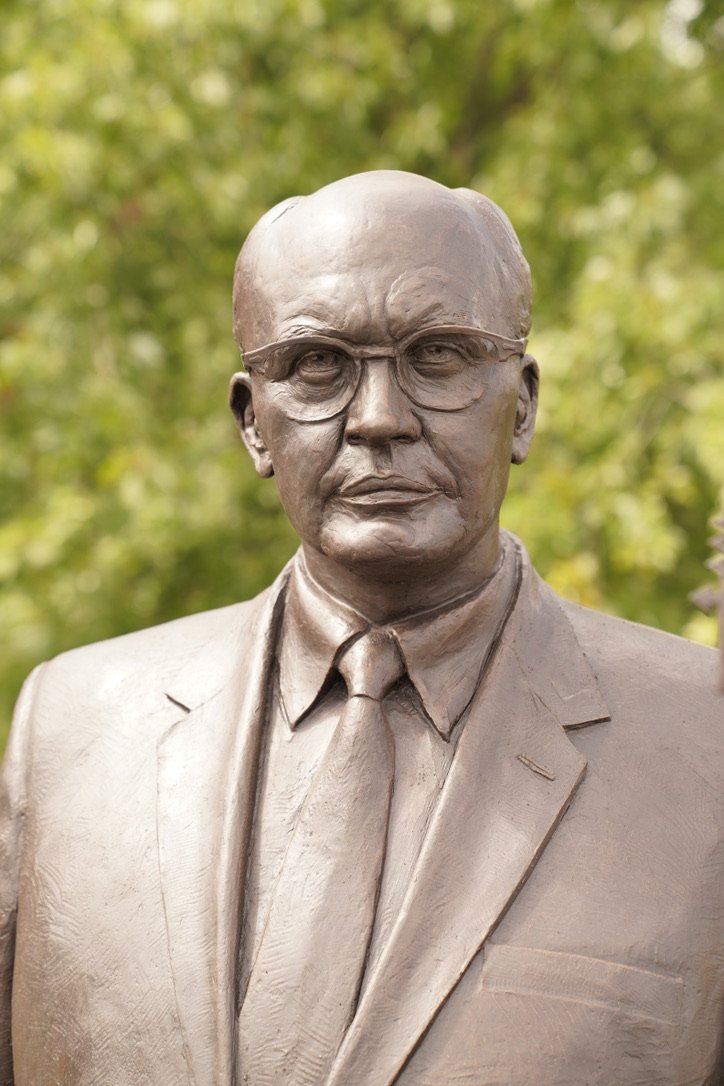
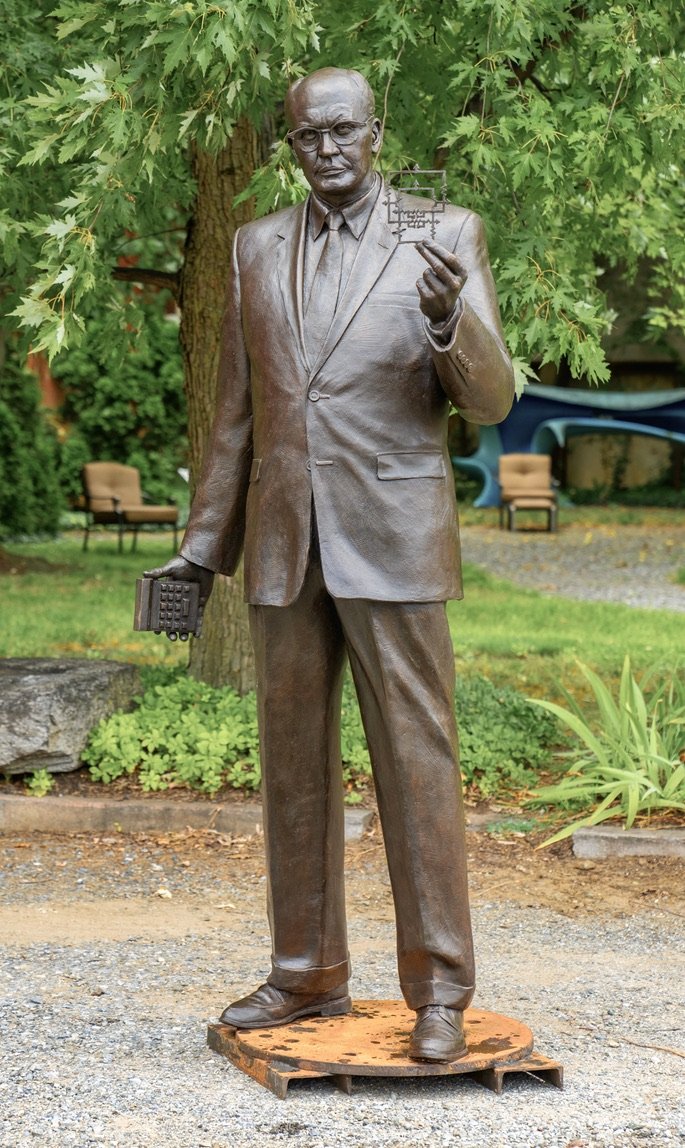
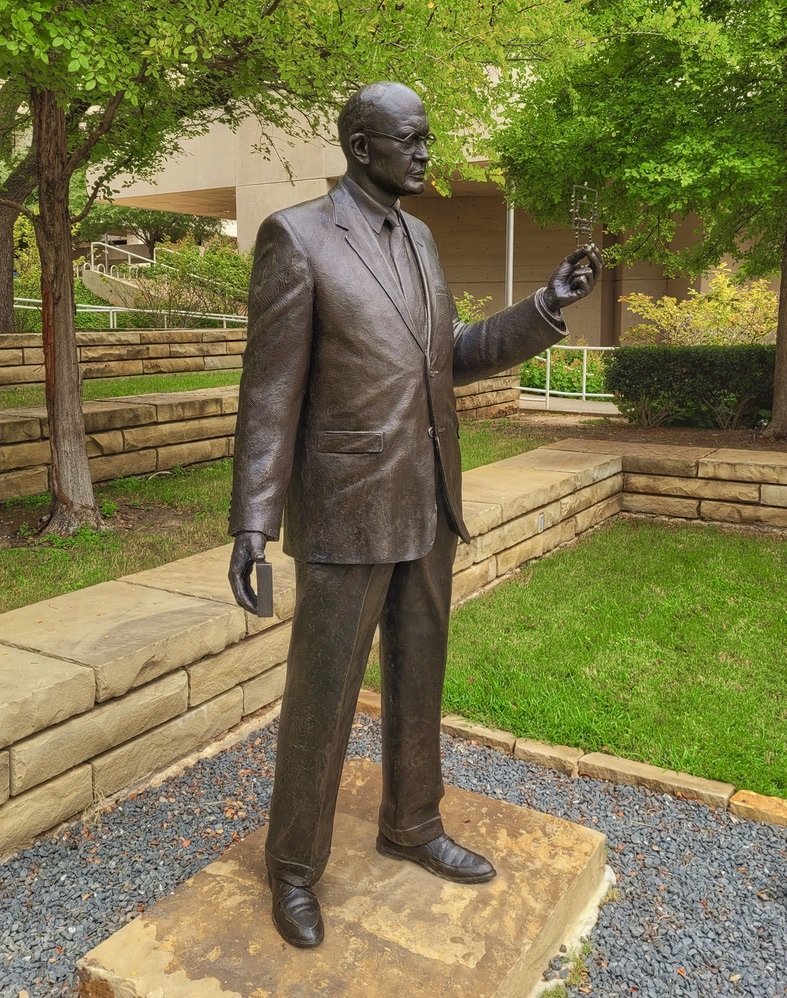
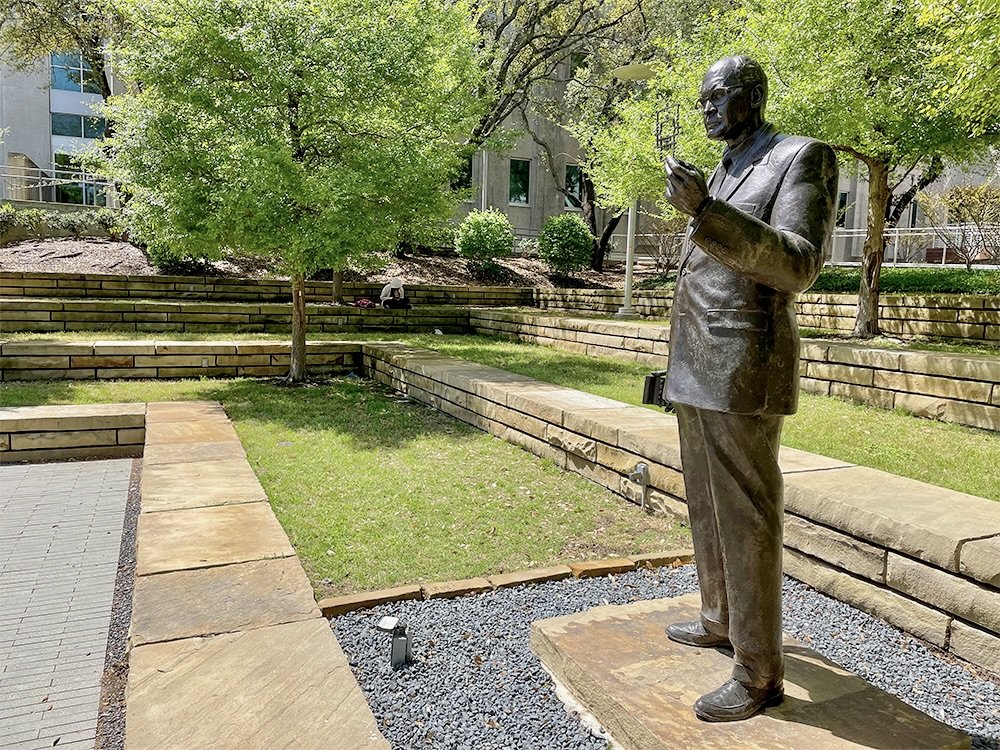
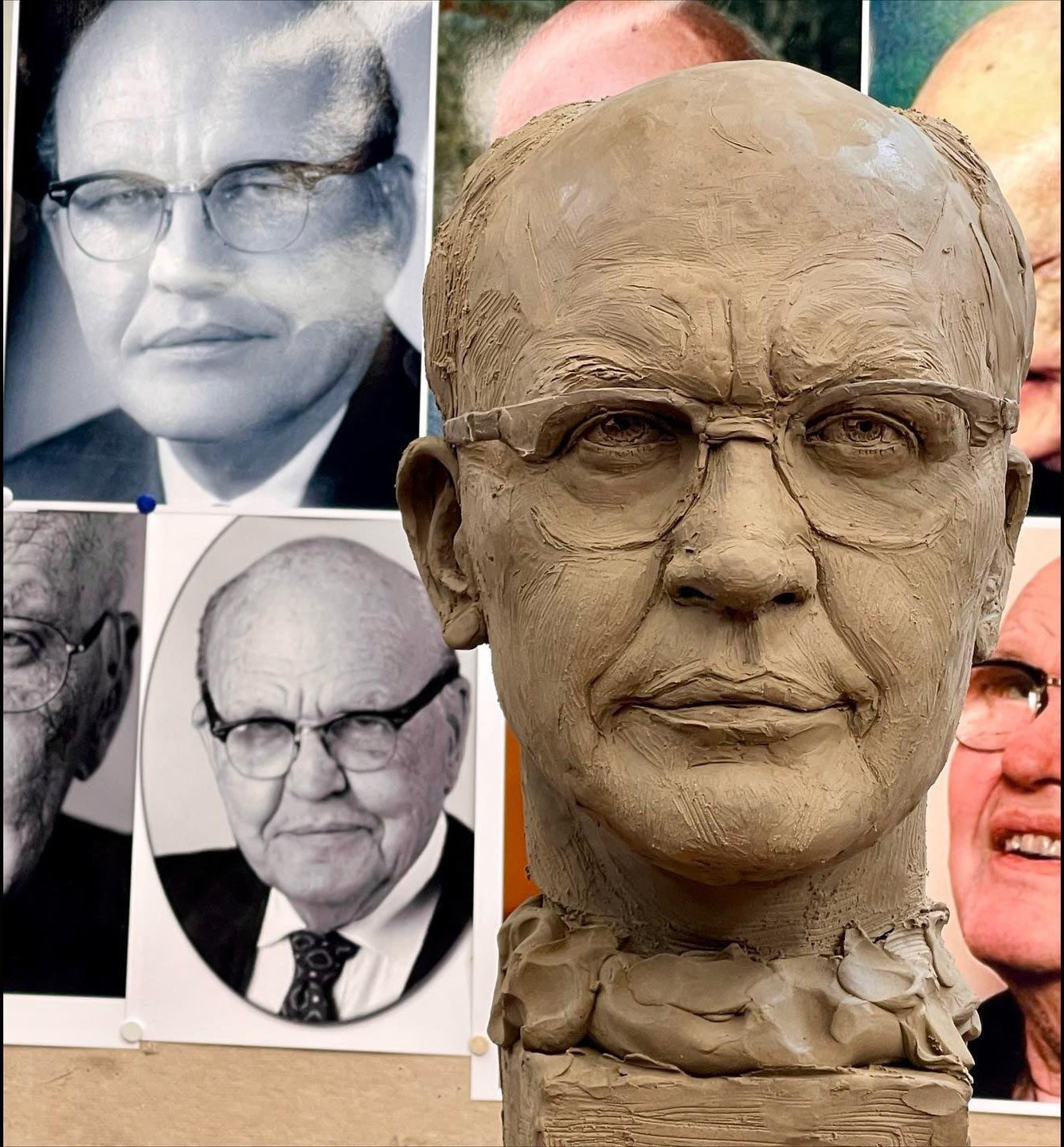
Jack Kilby, portrait statue
Nobel prize winner, Jack Kilby (November 8, 1923 – June 20, 2005), is recognized for his patent in 1959 for the first integrated circuit, also known as the microchip. Jack Kilby’s work as an American electrical engineer at Texas Instruments also resulted in the first handheld calculator, the “Pocketronic,” as well as the invention of the first thermal printer. In 2000, Kilby was awarded the Nobel Prize in Physics. Other honors include the National Medal of Science and the National Medal of Technology. To honor Jack Kilby’s contributions to science and engineering, the portrait statue of Kilby, sculpted by Zenos Frudakis, holds a diagram of the integrated circuit in one hand, and a handheld calculator in the other.
Monumental Sculpture / Portrait Statue
Size: 7-feet high
Installation: 2021
Media: Bronze
Collection: University of Texas
Location: Texas Instruments Plaza, Univeristy of Texas, Dallas, Texas
⭐America 250—Jack Kilby’s Inventions Advance Innovation
Jack Kilby solved the “tyranny of numbers” problem in electronics by integrating all circuit components into a single piece of semiconductor material. This invention—the integrated circuit (IC), also known as the microchip—became the cornerstone of the microelectronics revolution and the digital age, enabling the miniaturization, affordability, and reliability of electronic devices worldwide.
Nearly every electronic device in America—from household appliances and automobiles to medical equipment like pacemakers and advanced computing systems—contains microchips derived from Kilby’s breakthrough. The reliability and compact size of integrated circuits were critical for the computers used in the Apollo 11 mission to the Moon, highlighting their essential role in national security and space exploration. Today, the principles of the integrated circuit continue to drive advancements in artificial intelligence (AI) and automotive safety systems.
Kilby’s work is regarded as a catalyst for the “Second Industrial Revolution” and stands as a defining American innovation alongside the achievements of Henry Ford and the Wright brothers.